
ARTERIAL PLAQUE
Top Cardiologist Exposes the $15 Billion Blind Spot That Lets Arterial Plaque Keep Building, Even on a Statin...
Cardiologist whose own calcium score jumped 79 points — on the statin he prescribes every week — exposes the "Scan-and-Wait Playbook" that keeps millions watching their number climb, and the one thing his patient was quietly taking (without quitting your statin, adding another prescription, or waiting on a stent or a bypass)
Tue. Aug. 11th, 2026 | 05:11 am EST – 243,318 👁
Written by Dr. Richard Mooney, MD, Cardiologist & Vascular Health Researcher | 22 Years in Clinical Practice


I'm about to piss off a lot of cardiologists.
Because what I'm about to share could cost my own field $47 million in scan fees, follow-ups, and referrals this year alone.
But I don't care anymore.
After watching my own calcium score jump 79 points in 1 year, on the exact statin I prescribe every week…
After 12 months of doing everything right — and watching the number climb anyway…
After realizing I'd spent 22 years telling 11,000+ patients only half the story…
I discovered something that changed everything…
If you're reading this after another scan that came back worse, another "keep doing what you're doing," another night lying awake doing the math on your own arteries…
The next 5 minutes could give you your life back.
My name is Dr. Richard Mooney, MD.
I've been a board-certified cardiologist focusing on coronary artery disease and vascular aging for 22 years at the Cleveland Clinic and Mount Sinai.
I've read 20,000+ cardiac scans, treated 11,000+ patients, published 23 peer-reviewed papers on vascular health, and trained residents who now run cardiology departments of their own.
And I'm about to expose the dirty secret that keeps 20 million Americans with coronary artery disease watching their numbers climb, year after year — while my own field schedules the next scan, bills for it, and calls that care.
But first, you need to know my own number…
The number I couldn't fix...

It was 7:12 PM on Thursday, February 5th.
Still in my scrubs, keys in my hand, barely through my own front door when my phone buzzed. My scan, signed minutes earlier.
Calcium score: 298. A year earlier, 219.
Under 100, we watch it. Past 300, the conversation changes. A third higher in a single year. At that rate I'd be past 500 before I turn 60.
On the exact statin I prescribe every week…
I've told 400 families what comes after a number like that. Now I was doing that math on myself.
My body had been telling me for a year. I'd been explaining it away for a year.
Two flights to my office. By the top there'd be a band across my chest, tight enough that I'd stop on the landing with my hand flat against my shirt, waiting for it to let go. I told myself I was out of shape.
By the end of the day I was finished. Not tired. Emptied out. My wife would ask if I felt like a walk after dinner and I'd already be asleep in the chair before she got her shoes on.
None of it shows on a blood panel.
Next morning I walked it down to Dr. Elaine Park, the colleague I send my hardest cases to. She read it twice. "Nothing here you're doing wrong, Richard."
I stood in her doorway holding my own scan.
Useless.
A Cleveland Clinic cardiologist who couldn't explain his own number.
Nobody could tell me why. Least of all me.
Patients had been sliding bottles across my desk for 22 years. I handed every one back.
THE SCAN THAT CHANGED EVERYTHING...

Two weeks after my own scan came back, the anomaly walked into my office.
My patient Susan, 61. End of the day, my last appointment. She'd been on 40mg of atorvastatin for 8 years, and the score crept up every visit.
I pulled up her new scan next to last year's, ready to give the speech I give every year.
I stopped mid-sentence.
For the first time in 8 years, the score hadn't moved.
Scores almost never just stop like that. I'd barely seen it once.
I checked the dates twice. Then a third time, with her sitting right there.
Nothing in her chart explained it. Same statin, same dose, same diet, same weight.
"I haven't changed a thing, Dr. Mooney," she said. "Same pills, same walks, same breakfast."
Then, halfway out the door: "Well… there is one little thing I've been taking."
I barely registered it. 22 years of telling patients to skip that aisle, and I filed it under noise.
That night, I couldn't let it go…
I pulled her file up at home and went back through all 8 years of it. Line by line.
Nothing in there could account for it.
One scan is not proof. I won't pretend otherwise.
If anyone promises you this is guaranteed, close their page. Plenty won't see what Susan saw.
But in 22 years, I had never once watched a score simply stop.
I had to know why.
Because I'd already tried everything my 22 years of training taught me — and none of it had moved my own number.

- ❌Doubled my rosuvastatin. My legs ached for a month. The panel improved. The score didn't.
- ❌Added ezetimibe on top. A second pill, the same story.
- ❌Beetroot powder, every morning. All the nitric-oxide promises on the label. Nothing on the scan.
- ❌Nattokinase, 4 months. It thins the blood. The score kept climbing.
- ❌Cut my diet down to fish, oats, and olive oil.
- ❌Walked 40 minutes every single morning. Rain or not.
- ❌Even CoQ10, magnesium, and omega-3s, quietly. The things I'd waved off across my desk for 22 years.
12 months of that. The reward on my screen: 298.
Nothing had moved anything that mattered.
The mind-blowing discovery

For the next 3 weeks, I barely slept.
39 randomized, placebo-controlled trials, read end to end. 340 more papers on arterial aging. Researchers in 4 countries, one of whom rang me back at midnight his time because the question annoyed him as much as it annoyed me. $2,900 of my own money on journal access my hospital doesn't carry, most of it read at my kitchen table between 11 PM and 2 AM.
What I found made me want to hand back every reassurance I'd given across that desk for 22 years.
In 1998, three scientists shared the Nobel Prize in Medicine for one finding: the lining of your blood vessels makes a gas called nitric oxide, and that gas is what tells an artery to open.
Not the blood. The lining.
You might have heard of nitric oxide before. It's printed on the front of every beetroot powder and circulation formula on the shelf, and you might even have a tub of it in your kitchen.
Here's what those labels leave out. You can't take nitric oxide. Your lining makes it. Pour some in from the outside and it's gone in a few hours, while the factory that's supposed to run all day sits there damaged.
Robert Furchgott proved it in 1980. Strip the lining from an artery and it will not relax. Not for a drug, not for anything. Leave it intact and the same artery opens.
So this is not fringe science. It's in the textbook I studied from, and every cardiologist in America can recite it.
Statins are a $15 billion a year business in this country.
I've written my share and I'd write them again tomorrow. They do their one job well.
But nobody owns that lining. Nobody can patent it. No sales rep has ever walked into my office with lunch and a slide deck about it.
So it isn't marketed, it isn't measured, and not one line on your chart tracks it.
It's not a secret because someone is hiding it. It's a secret because there's no money in telling you.
But before I show you what reaches that layer, you need to understand why your number keeps climbing at all.
For 22 years, I had been treating it wrong…
Why your number keeps climbing, even on a statin...
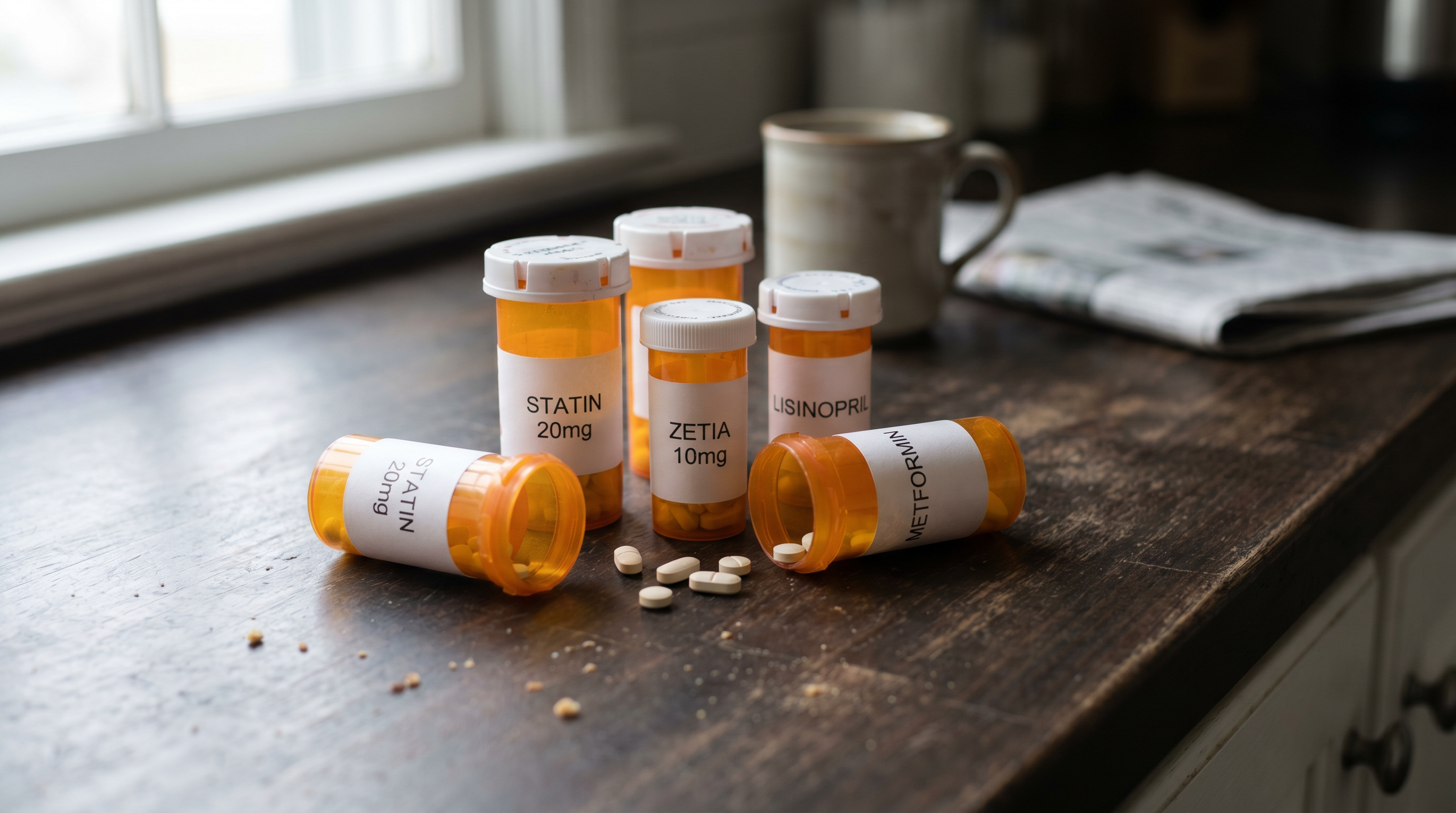
Here's what almost no one tells you. On a statin, a climbing score is often the statin working.
Picture a scab over a cut. The soft plaque, the part that can burst, hardens and seals shut.
That seal is calcium. On the scan, it's a bigger number.
The number going up was the one part that was actually going right.
So your fear wasn't wrong. It was aimed at the wrong number.
The score shows yesterday. What you can still change is the age of the wall underneath. The one still breeding soft plaque.
The real root cause of arterial plaque (that nobody measures)

That's your vascular age. It can run years ahead of your birthday. It's the thing I'd been missing on every scan I read.
Inside the wall sits a tiny engine. It's called eNOS.
Its job: make nitric oxide. The signal that tells your artery to open.
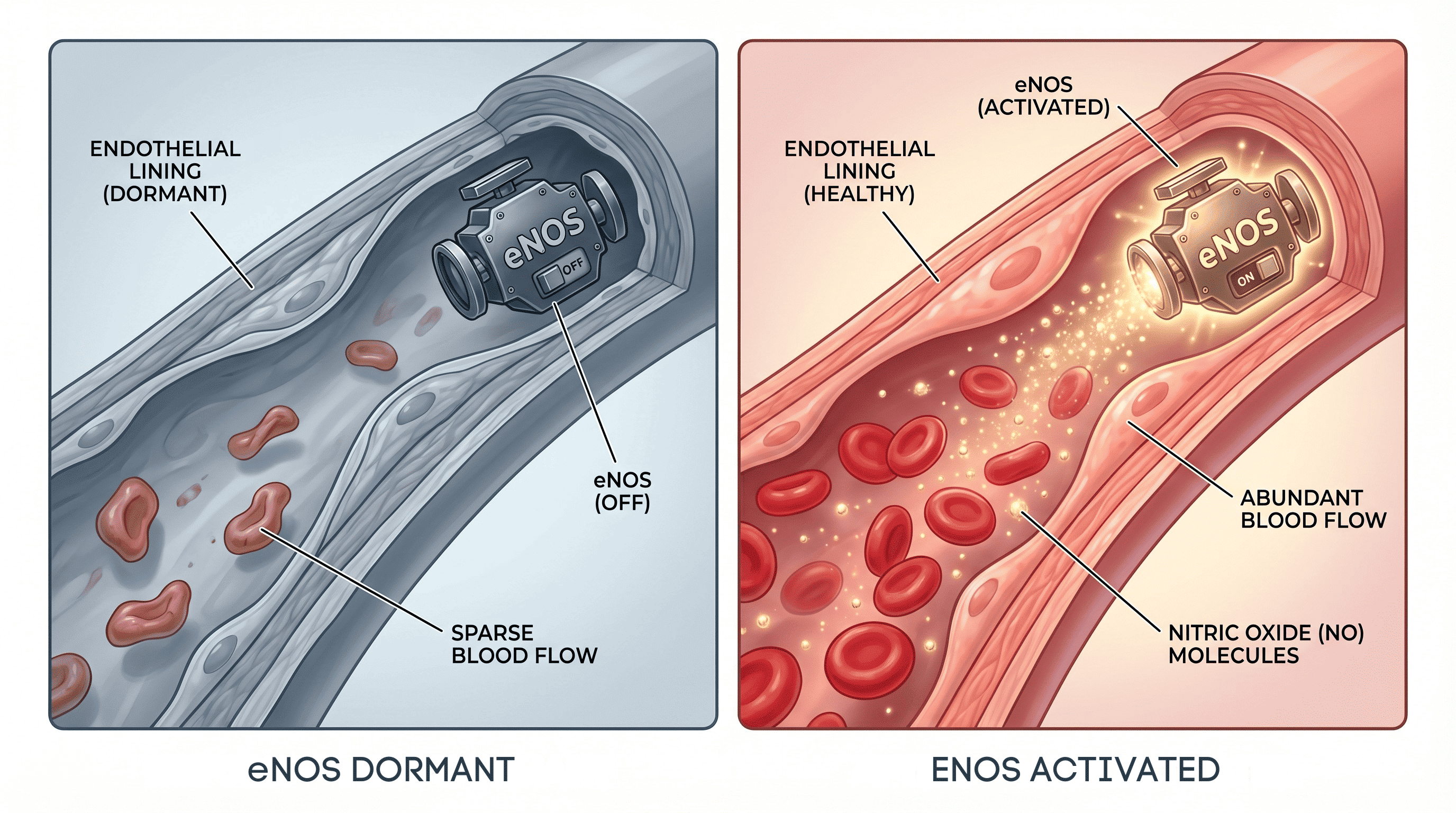
As the wall ages, the engine slows. Less nitric oxide. Less flex.
A new hose bends. An old one cracks.
You've already felt it. The cold hands. The stairs. The afternoon wall.
Every week someone sits across from me and says the same sentence: "But my cholesterol is fine."
None of it shows on your blood panel. It isn't in your blood. It's in the wall.
Beetroot pours fuel into a slowing engine. Nattokinase never reaches the wall. CoQ10 moves a number on a lab sheet. That's why none of it moved my number.
Cholesterol doesn't stick to a healthy lining. It passes through. It catches where the lining has stiffened and roughened, because that is the only place it can.
That stiff wall is where new plaque takes hold. And it's the one place your statin can't reach.
Like jumpstarting a car with a dead battery. The engine turns over. The battery keeps dying.
So you raise the dose. Add a pill. The panel reads better. The wall keeps aging underneath it.
Those higher doses come at a price. Aching legs. A fog you can't shake. The tiredness sleep won't touch.
Plenty quietly quit. Plenty more can't take a statin at all.
This is what I've come to call the Scan-and-Wait Playbook, and I ran it on my own patients for 22 years:
Scan the arteries once a year → watch the number climb → raise the dose → add a second pill → "keep doing what you're doing" → repeat until the number is high enough for a stent.
Nobody in that loop is lying to you. Every step is defensible on its own.
It just never once touches the thing that's actually aging.
The part of you nobody is measuring...

It stiffens a little more every year. What hardens doesn't soften again.
The flex it loses is gone for good. Past a point, the wall is set, and the window quietly shuts.
You don't catch the day it closes. You find out later.
The stent. The bypass. Or the morning your body skips the warning, and it's a heart attack. Or a stroke that takes your words and won't give them back.
That's the real fear. Not dying. The slow decline that comes first.
The years you spend as the patient, not yourself. Driven to the appointments. The one they worry about, not the one they lean on.
Watching the grandkids from the chair, instead of down on the floor with them.
Those are the years no one gives back.
But you're reading this in time. The window's still open, and the wall is the one part you can still move.
The solution that was hiding in plain sight
So what reaches it? Whatever it is, it has to do what nothing on my list could. Get inside the wall. Wake the stalled engine. Stop the stiffening.
Nothing I had ever prescribed came close. Nothing on the supplement shelf did either.
One thing did. All that research kept landing on the same place: a cluster of compounds called proanthocyanidins.

They work both fronts at once. They wake the eNOS engine, and shield the elastic fibers so the wall stops stiffening.
Inside the wall. The engine. The stiffening. Every box on my list, checked.
Here's what that means for the plaque itself. Keep the wall smooth and flexible, and the same cholesterol has nowhere to land.
That is not clearing out what's already in there. The calcium you have is set. It's stopping the next layer from forming on top of it.
You've eaten them before, in traces. Grape seeds. Apples. Cocoa. But at levels far too low to touch an artery wall.
The richest source of them, by far — the bark of one pine that grows on the Atlantic coast of France.
Tree bark.
I sat back in my chair. 22 years, 20,000 scans, and the answer is tree bark.
I know exactly how that sounds, because I'd have laughed at it too. I did laugh at it. Every time a patient slid a bottle across my desk, I handed it back wearing the same look that's on your face right now.
Then I remembered Susan, halfway out my door. The one little thing.
I called her the next morning and asked her to read me the label.
A French pine bark extract. From the supplement aisle. The aisle I'd spent 22 years telling her to skip.
She'd been right the whole time. I'd been wrong for 22 years.
Then came the part that embarrassed me most. This bark has been studied in 39 randomized, placebo-controlled trials, most of them run in Europe, where doctors have worked with the extract for decades.
Turns out, almost none of us cardiologists over here had ever heard of it.
Then I pulled the trials nobody had shown me...
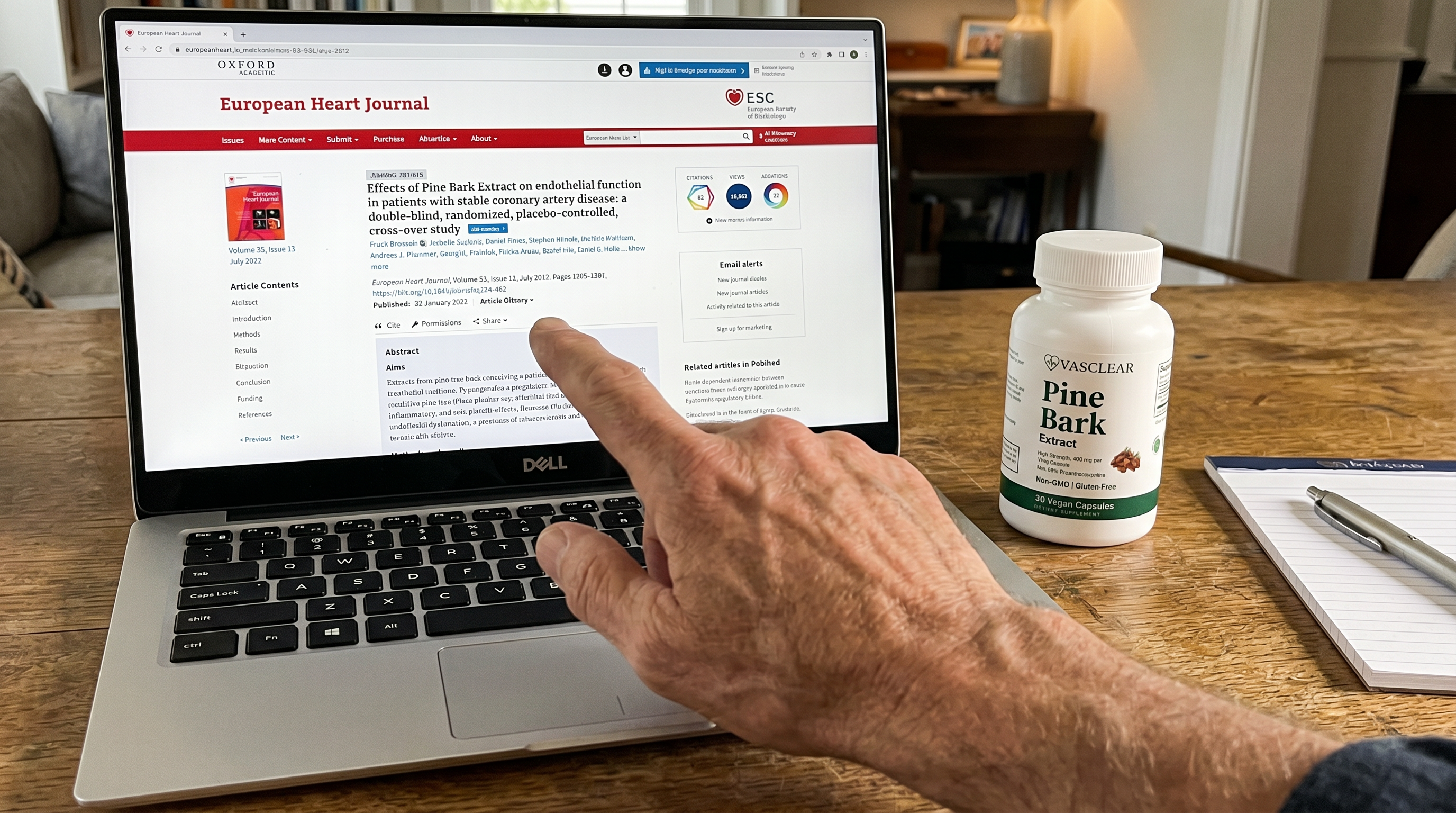
I know how that sounds. Another supplement, another wall of "clinical studies."
This one was measured the way your cardiologist measures you. Blood flow. Vessel function. Plaque. Not wellness surveys.
That's the warm hands again. That's the stairs that stop fighting back. The wall still moved.
What 40 years of trials measured
- ✅Endothelial function up 66%, the lining making nitric oxide again, in adults with borderline blood pressure and cholesterol. (Hu & Belcaro, 2015)
- ✅Blood flow up 41% in a placebo-controlled trial. It proves the mechanism works, not a promise about your own scan. (Hypertension Research, 2007)
- ✅Slower plaque progression over 42 months on ultrasound, alongside lower oxidative stress, compared to standard management alone. (Belcaro, International Angiology, 2015.) Read the fine print with me: that one was observational, not randomized, and the authors themselves called for a controlled trial to confirm it. Slower growth is what it showed. Not plaque going away.
- ✅Lower LDL, too, on its own. A real bonus the day you can't tolerate the statin, though the wall is still the point. (Devaraj 2002; Trebatický 2019)
- ✅No drug interactions, and 40+ years of human safety data. Clean enough to take right alongside your statin, nothing to weigh up first.
That's it. The wall. The one thing you can still change.
You won't be waiting months, either. The first signs come fast, often inside a week or two.
Picture a morning a few weeks from now. Hands warm before your coffee. The stairs easy again. Feeling like yourself for the first time in years.
So I tested it on my own arteries...
You know my number. 298, after a year of doing everything right.
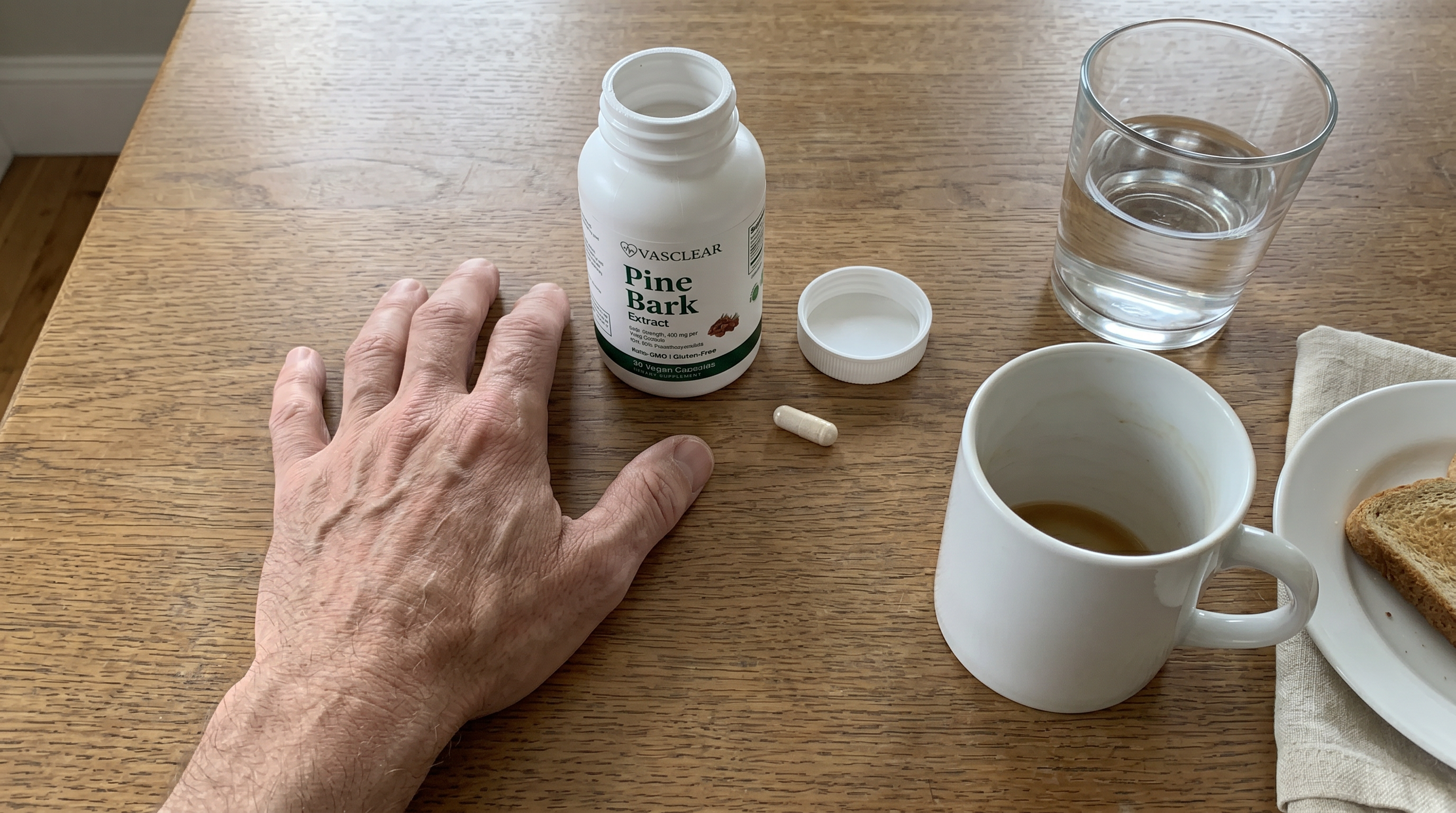
I don't take supplements on faith, and I wasn't about to hand it to a patient on the strength of one scan and a stack of papers. So I did the only honest thing. I took it myself first.
One capsule with breakfast, the week I finished reading.
Before the log, one honest warning. The first 2 weeks, nothing happened. I checked my hands every morning like a man waiting on a lottery ticket, and felt exactly the same. If I hadn't understood the mechanism, I'd have quit right there and told you it doesn't work.
March 14. Calcium score 298. Started that morning.
March 28. Hands WARM by lunch. Two years since I'd felt that. Wrote it down.
April 11. Blood pressure dropped from 138/86 to 124/79.
April 25. My wife mentioned I'd stopped waking up at 3am.
May 9. LDL came back at 71. It had not been under 90 in 5 years.
May 23. Flow-mediated dilation, the test that measures how well an artery opens, up from 4.1% to 6.8%.
Six months in, I scanned again.
For the first time in years, it hadn't climbed.
I showed it to Elaine. She checked the dates twice. Then: "I almost never see a score just stop like that."
What happened when I started saying this out loud...

Elaine called a week later. Not about my scan. About her father, whose score is 412 and climbing.
"What's it called? It's for my dad." 19 years in cardiology. She ordered 3 bottles that night.
At a conference dinner in April I brought it up at a table of colleagues and got the look. The one I used to give. Two of them emailed me that same week, quietly, asking for the label.
Word got around my practice. Over the next few months 17 patients started it on their own and told me at their next visit. The retired teacher with warm hands for the first time since her bypass. The 71-year-old golfer walking the full 18 again, statin included. The trucker sleeping through the night instead of running 2 AM math.
Every. Single. One. Still on it.
Then the other side of it arrived.
Three weeks after that dinner, a referring group that had sent me patients for 9 years stopped. No email. No conversation. My calendar just got thinner.
My practice manager asked me, politely, to keep my name off anything that could be called commercial. In March a complaint went to the state board. Reviewed, closed, no action, because I hadn't sold anything and hadn't told one patient to stop a medication. It still cost me 6 weeks and a lawyer.
That's how it works when you go against $15 billion worth of habit. Nobody sues you. They just quietly stop sending you work.
Which explains the thing you've been wondering the whole way down this page.
Your cardiologist knows every word of the science I just showed you. He will never bring it up in a 12-minute appointment. Not because he's hiding it. Because there is nothing in it for him but risk.
And it wasn't only me...
Once people started trying it on their own, the comments started showing up.
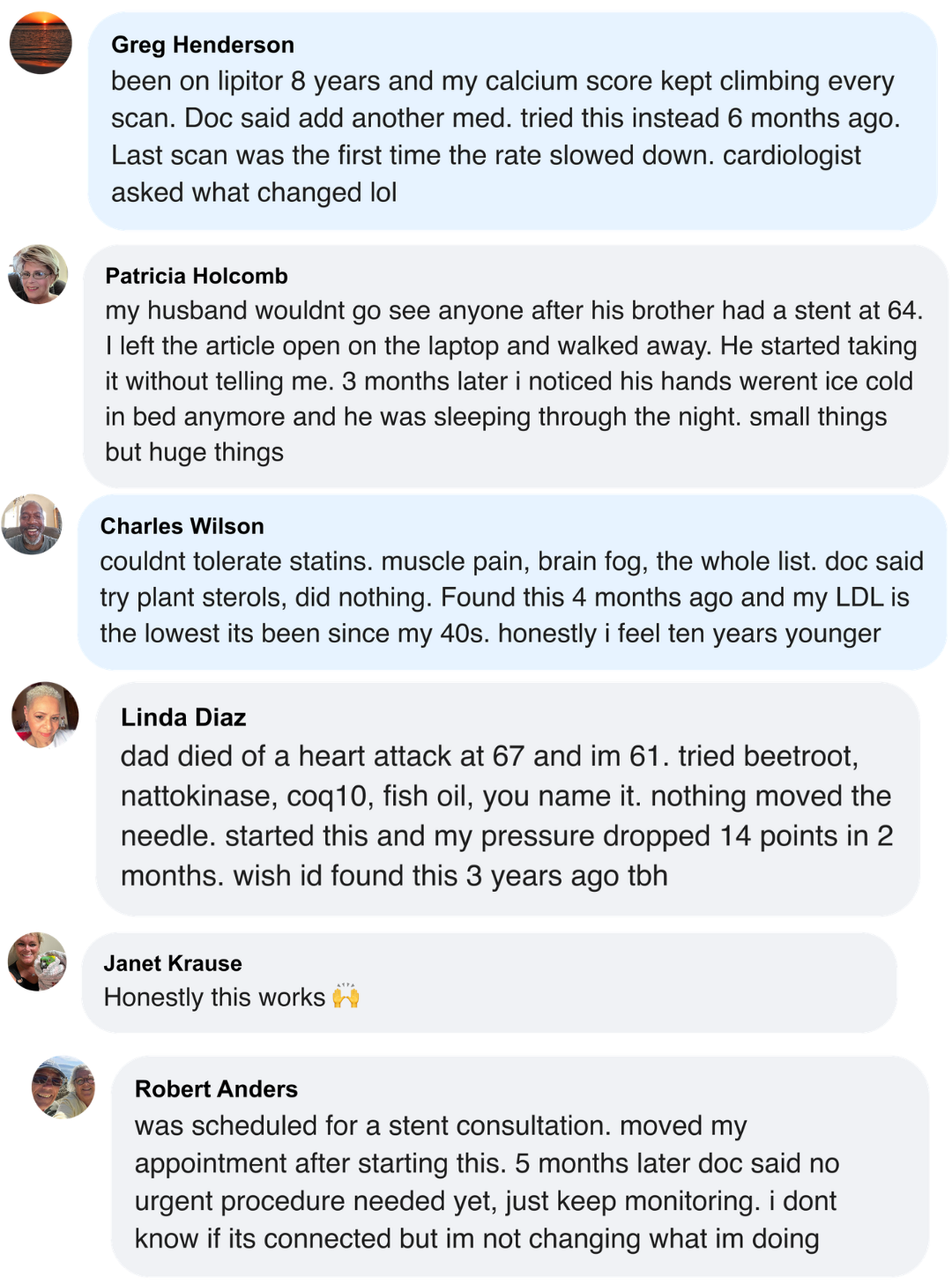
Hundreds of them, on posts that had nothing to do with me.
How to know if this is your problem too...
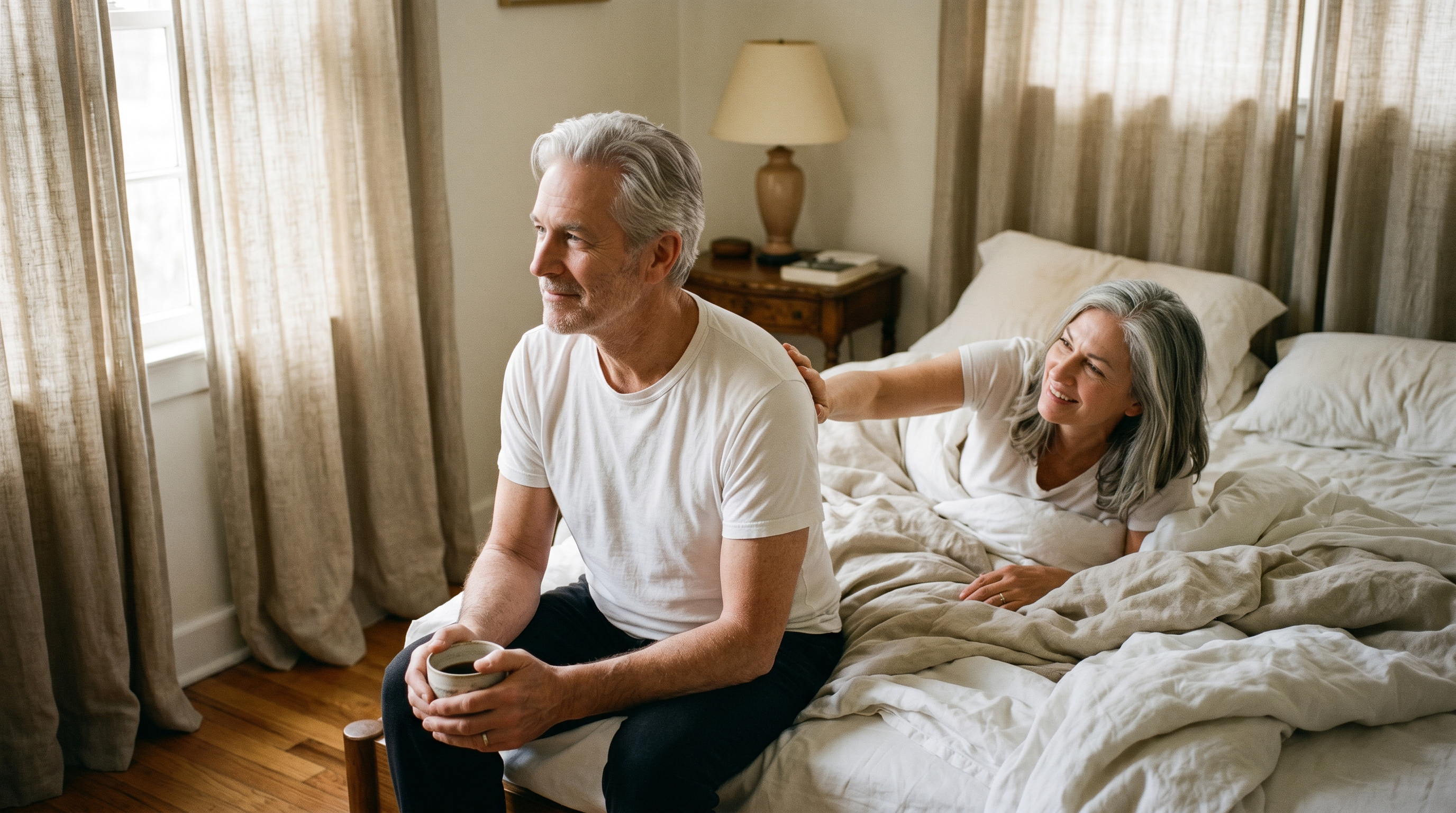
This isn't for everyone. But you don't need every line. If even one of these sounds like you, it's worth your time:
- ✅A calcium score that keeps climbing, even on a statin
- ✅Hands and feet that run cold
- ✅Stairs and hills that take more out of you
- ✅An afternoon slump that wasn't there a few years ago
- ✅A heart attack or stroke in the family
This replaces nothing. Keep your doctor, keep whatever you're on. It's just the one lever no one ever gave you.
If even one of those hit home, you already know what's missing. You've been living it.
What I now keep on my own desk...
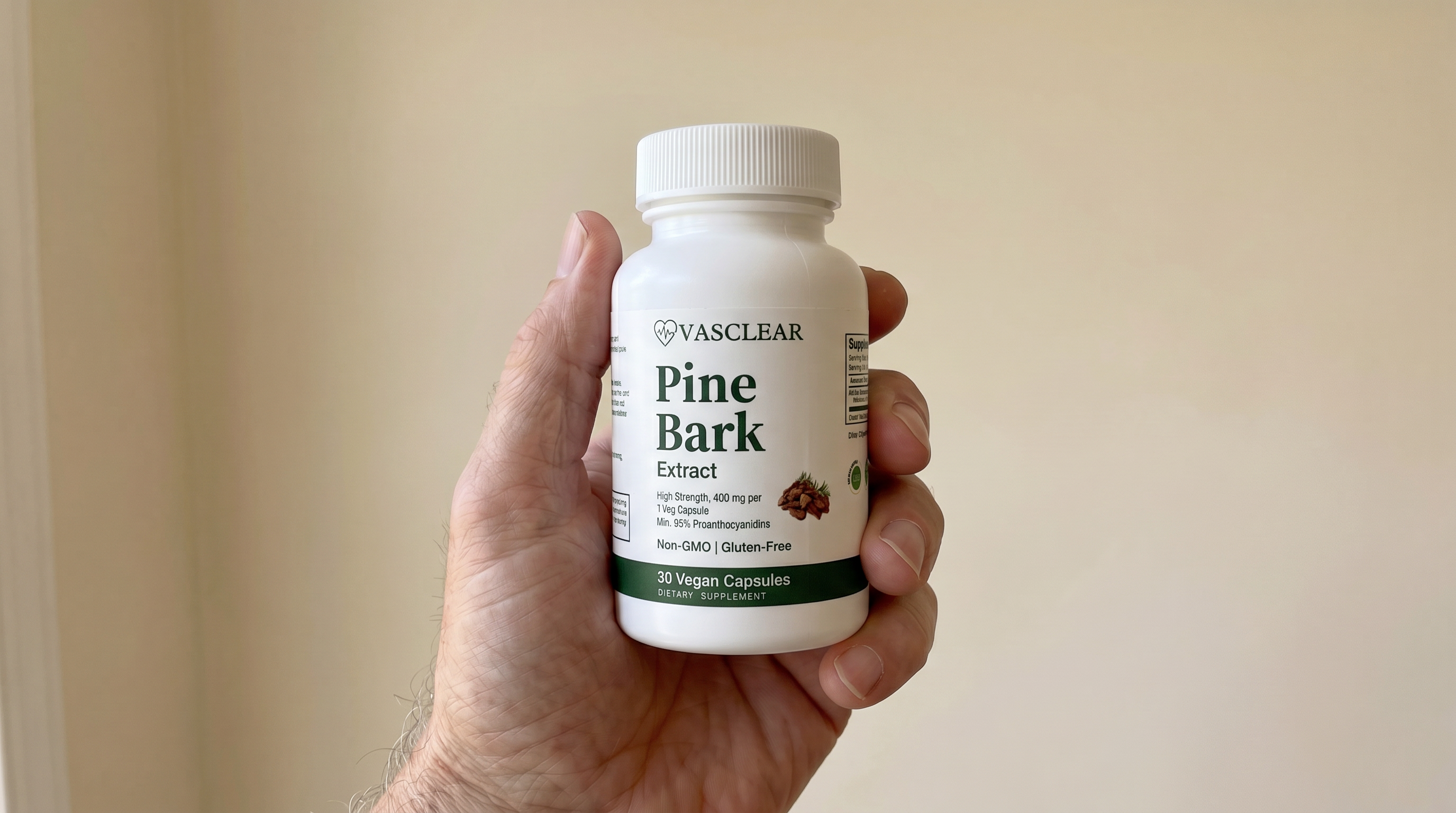
In 22 years I never recommended a supplement. This is the first.
It's called Vasclear.
The bottle Susan had been taking all along. The same one I've had with breakfast every morning since March.
It's not the ground bark powder from the vitamin aisle. It's not a 12-ingredient "circulation blend" with a little of everything and enough of nothing.
One ingredient, at full strength: 400mg of French maritime pine bark, standardized to 95% proanthocyanidins. Third-party tested, every batch.
Inside your artery wall, it does the 2 jobs nothing else on your shelf can:
- ✅THE ENGINE STARTER — wakes the eNOS engine in the lining, so the wall starts making its own nitric oxide again. That's the flex coming back. The warm hands.
- ✅THE WALL SHIELD — shields the elastic fibers from the oxidation that stiffens them, so the wall stops aging ahead of you.
Both fronts, one capsule. While your statin handles the cholesterol, this works on the wall behind it.
Let me be blunt about what it will not do. It will not unclog an artery. Nothing you swallow will. What has already hardened in there is hardened, and any page that tells you different is selling you a story.
I'm not saying it from behind a desk. Take off the white coat and I'm you: 58, on a statin, and I watched that number climb too.
The company gives you 90 days to decide. Almost nothing to lose, and a wall you can still move.
What the first 90 days actually look like
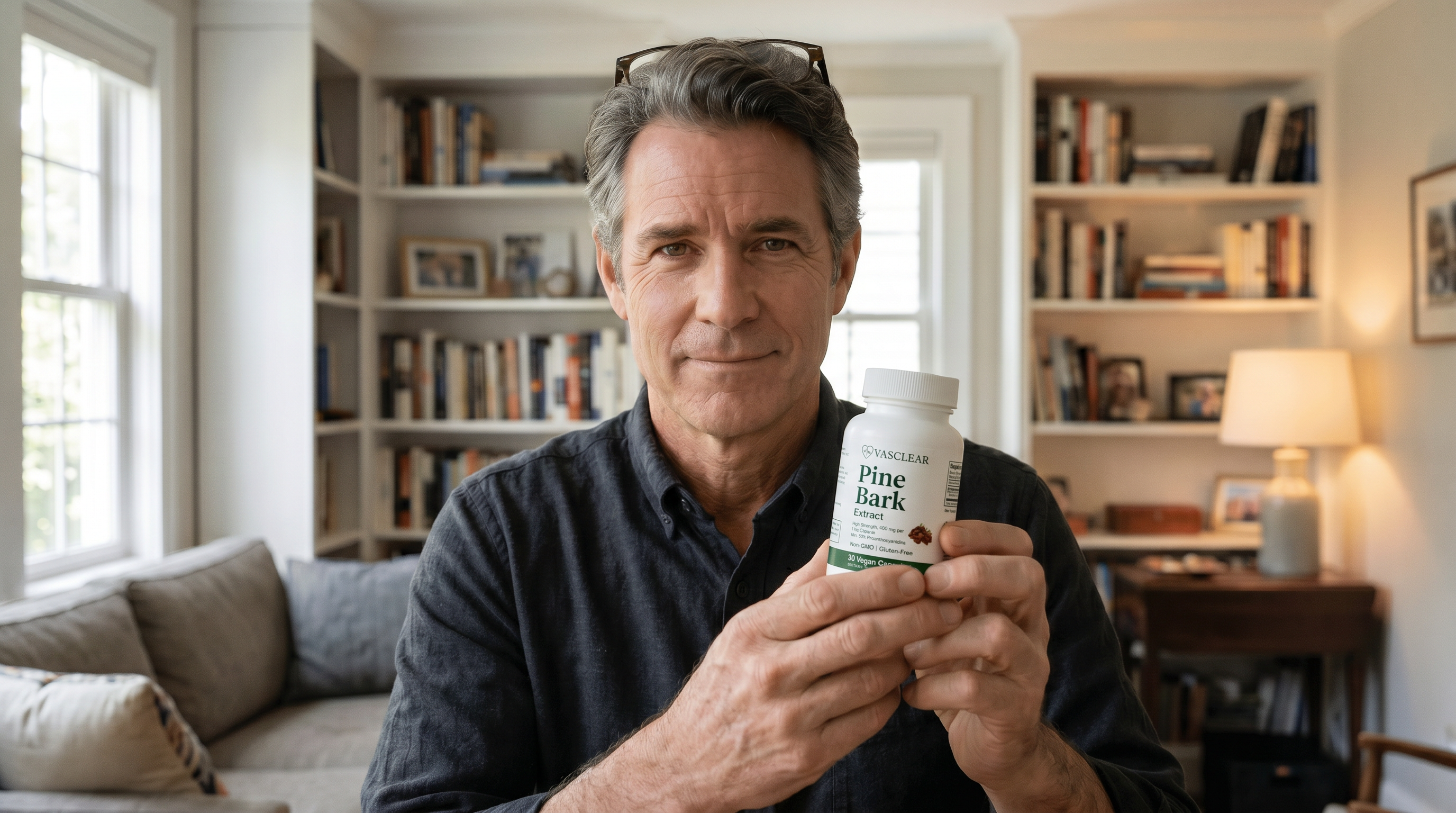
I'll tell you what to expect, so you can hold me to it.
Weeks 1 and 2. Nothing. This is where most people quit and go tell a friend it doesn't work. The compounds are reaching the lining. You cannot feel a lining.
Weeks 3 to 6. This is where it usually shows up first, and never where people expect. Hands that aren't cold. Stairs you get to the top of without the pause. The 3 o'clock curtain that doesn't come down.
Months 2 and 3. The measurable ones start moving. Blood pressure. Bloodwork. If your doctor runs the flow test, that too. This is the stretch where patients come back and ask me what changed.
Month 6 and beyond. This is where almost everyone stays, and it's worth understanding why. A wall doesn't get one good year and coast. Stop feeding it and it goes back to aging the way it was.
That's the whole timeline. No week-one miracle, because there isn't one.
What my patients say when they come back...

Vasclear has gone out to more than 12,000 people now. These are some of the ones who wrote in and sent a photo with it.
The company surveyed more than 1,000 of them. What came back:
Here is what comes back, in their words:
"Three years my calcium score kept climbing, and I was on 40mg of Lipitor the whole time. Every scan, I'd sit in the car in the lot first, bracing for how bad it'd be. Started Vasclear about six months back. Look, I can't tell you what the next scan'll say, nobody can. But my hands aren't ice cold anymore, and the other day I got down on the floor with my grandkids and just got BACK UP, didn't even think about it. Last scan was the first time in three years I drove home without running the numbers on my phone the whole way. Called my wife from the parking lot."
"The muscle pain from my statin got so bad I could barely make it up the stairs. My doctor told me to push through it. I couldn't, so I stopped, and then spent every day worried I was leaving my heart unprotected. Started this instead. Three months in and, honestly? I've got my energy back and my legs feel like MINE again. The last blood draw even came back better than I expected. Kind of annoyed I didn't find it sooner, if I'm being honest."
"My dad dropped dead of a heart attack at 64. I'm 59, so trust me, I think about it. I tried the lot. Beetroot, nattokinase, CoQ10, niacin. Nothing ever moved. My brother-in-law swore by this, so four months ago I figured what the hell. I won't pretend I know what's going on under the hood. But I'm sleeping THROUGH THE NIGHT again, and I've stopped lying there at 2am running the worst-case math. My wife clocked it before I did. Said I seemed lighter, like I wasn't off in my own head at the dinner table anymore."
The part nobody wants to say out loud...

That's what we're actually talking about. Plaque, lifted out of one artery on an operating table. Years of it, laid on a surgical drape.
Nobody swallows their way out of that. By then it's a surgeon's job.
The wall doesn't stop aging because you feel better.
The proanthocyanidins aren't a course of antibiotics. You don't finish the bottle and graduate. They keep the engine running and the fibers shielded for as long as they keep showing up.
Think of your statin. You don't quit it because your panel looks good. Your panel looks good because you take it.
Same logic, one layer deeper.
That's why the people above don't stop at 90 days. The warm hands are the sign it's working, not the sign you're done.
Do the math your cardiologist won't...
Look at what's already on your counter. The shelf that works on the blood and never touches the wall runs $60 to $90 a month, forever. Bill's came to $3,100.
In a specialty pharmacy, a standardized extract at this dose would run you $150 a month.
Vasclear runs under $1 a day, and as little as 65 cents on the bundle most people take. Less than your morning coffee, aimed at the one layer everything on that shelf ignores.
You are not adding a cost. You're replacing the ones that were never pointed at the problem.
Stop settling for half...
Half the energy. Half the plans. Half the person you were 10 years ago.
Weeks from now, your hands are warm before the coffee's ready.
When scan day comes around, for the first time in years you're not bracing.
You didn't plan it. You didn't have to.
One evening, somebody at the dinner table asks what's gotten into you, and you just smile.
That version starts with the first capsule.
If it does nothing for you, send it back. 90 days, full refund, no forms.
Two roads lead out of this page...

Option 1: close this tab. Keep the statin, keep the scans, keep watching the number. You already know how that road looks, because you've walked the first stretch of it. Same appointments. Same bracing when the results come in. By your next scan, a wall a year older.
Option 2: add one capsule to the breakfast you already eat. Keep your doctor, keep your statin, and give the wall the one thing that reaches it. If nothing changes, send the bottles back and take option 1 knowing you tried.
I think you know which one ends with you down on the floor with the grandkids.
Important Update
Since this article was published, Vasclear has gained attention across the country. They reached out to offer our readers up to 65% off, with free shipping and a full 90-day guarantee.
One honest catch: it has sold out 9 times. When this run is gone, the discount closes with it.
Why the cheap one on Amazon will do nothing for you...

"Can't I just grab a cheap one on Amazon?" I hear it every week.
You can. It'll do nothing for you.
On that phone call, I had Susan read me every line on her label. 400mg. Standardized to 95% proanthocyanidins.
So I bought 6 pine bark bottles on Amazon and flipped every one of them over.
Not one printed a standardization percentage. They won't say what's inside, because the honest answer is: barely anything.
25 to 75mg per capsule. Not standardized. No testing.
50mg or less, buried with fillers. Nothing hits a real dose.
400mg standardized to 95% proanthocyanidins. One ingredient. Third-party tested. NOT SOLD ON AMAZON. Official site only.
A typical Amazon bottle gives you 25 to 75mg. Vasclear gives you 400. A fraction of the dose gets you a fraction of nothing.
One of my patients told me she'd tried pine bark years ago. Cheapest bottle she could find. Ten weeks, nothing moved, and she wrote the whole category off. "Pine bark doesn't work."
She'd never tried pine bark. She'd tried a watered-down version of it.
That's the real trap. Not the $19. Writing off the one thing that reaches the wall, sure you already gave it a shot.
My patient Bill, 67, once read me a list from his phone. Beetroot, with the $249 juicer. Nattokinase, 9 months, 4 different brands. CoQ10, every morning for 6 years. Around $3,100, and his score climbed every single year of it.
Everyone told him what to buy. No one ever told him why it kept failing.
He started in March, the same week I did. One capsule, in the same breakfast slot where the CoQ10 used to sit.
By May his hands were warm again. At his scan last month, his score had held for the first time since I've known him. One man, one scan, and I told him exactly what I've told you: that's not proof. He teared up in my office anyway.
Not because of the number. Because for the first time in 6 years, he understood why.
Most people wait. The cholesterol looks fine, so a climbing score doesn't scare them. I almost did too.
A patient asks what I'd take if I were them. I don't make a speech. I just show them the bottle on my desk.
Here's exactly what happens next...
Step 1: Tap the availability link below. It goes to the official Vasclear page, the only place it's sold.
Step 2: Pick your supply. Most readers start with the Buy 2 Get 1 Free. That's the full 90-day window the guarantee covers.
Step 3: Take your first capsule with breakfast the morning it arrives. Not "after the weekend." The wall doesn't wait.
Step 4: Mark your calendar for day 14. Check your hands first. That's usually where it starts.
[ → CHECK AVAILABILITY NOW - UP TO 65% OFF + FREE SHIPPING ]
Whatever you do, don't close this page thinking "maybe later."
"Later" is another scan you brace for.
"Later" is another year the wall stiffens while your panel looks perfect.
"Later" is the version of you the grandkids only ever see in the chair…
[ → CHECK AVAILABILITY NOW - 90-DAY MONEY-BACK GUARANTEE ]

[ → CHECK AVAILABILITY NOW - UP TO 65% OFF + BUY 2 GET 1 FREE ]
To warm hands, easier stairs, and a scan you stop dreading,
Dr. Richard Mooney, MD — Cardiologist · Creator, Arterial Plaque Reset · 22 Years Reading the Scans · The Cardiologist Who Finally Looked at the Wall
P.S. — Bill's wife sent me a photo from their trip last month. Bill, halfway up a lighthouse staircase, grinning back at the camera. The man who once read me a $3,100 list of everything that never worked. That could be you by your next scan. But only if you start.
P.P.S. — It has sold out 9 times. I don't control their stock, and I won't pretend I do. If the page is still up, it's available. That's all I can promise.
P.P.P.S. — If you're a cardiologist reading this and you disagree, I understand. I was you for 22 years. All I ask: pull the 39 randomized trials before you write it off. That's all it took for me.
P.P.P.P.S. — The #1 mistake I see: people feel their hands warm up around week 6 and stop. The wall doesn't stop aging because you feel better. That's like quitting your statin because your panel looks good. Your panel looks good because of the statin. Keep taking it, and reorder before you run out.
The questions I get every week...
"Will this replace my statin?"
No. Keep your statin exactly as prescribed. They do different jobs: the statin clears cholesterol in your blood, this works on the wall the cholesterol sits behind. One doesn't touch the other.
"How is this different from the beetroot and CoQ10 I've tried?"
Those work on the blood, or push more fuel into an engine that's already slowing down. This is aimed at the engine itself, the eNOS in your artery wall, and at the elastic fibers that keep the wall young. That's the part nothing else you've tried was built to reach.
"How fast does it work?"
Not overnight, and anyone promising a same-day miracle is selling you something. Most people notice the felt signs first, warm hands, easier stairs, often inside a week or two. The deeper work on the wall takes months. Give it a fair 90 days.
"Is it safe alongside what I take?"
Keep your prescriptions exactly as they are. Pine bark extract has no known drug interactions and 40+ years of human safety data. As with any supplement, mention it to your doctor at your next visit.
References
- Enseleit F, Sudano I, Périat D, et al. European Heart Journal. 2012;33(13):1589–1597. pubmed.ncbi.nlm.nih.gov/22240497
- Nishioka K, Hidaka T, Nakamura S, et al. Hypertension Research. 2007;30(9):775–780. pubmed.ncbi.nlm.nih.gov/18037769
- Hu S, Belcaro G, Cornelli U, et al. International Angiology. 2015;34(1):43–52. pubmed.ncbi.nlm.nih.gov/25391252
- Belcaro G, Dugall M, Hu S, et al. International Angiology. 2015;34(2):150–157. pubmed.ncbi.nlm.nih.gov/25519846
- Devaraj S, Vega-López S, Kaul N, Schönlau F, Rohdewald P, Jialal I. Lipids. 2002;37(10):931–934. pubmed.ncbi.nlm.nih.gov/12530550
- Trebatický B, Muchová J, Žiaran S, Bujdák P, Breza J, Ďuračková Z. Bratislava Medical Journal. 2019;120(12):941–944. pubmed.ncbi.nlm.nih.gov/31855055
The information on this page is for educational purposes only and is not intended as medical advice. These statements have not been evaluated by the Food and Drug Administration. This product is not intended to diagnose, treat, cure, or prevent any disease. Individual results may vary. Always consult your physician before starting any supplement, especially if you have cardiovascular conditions, diabetes, or take prescription medications.
Testimonials reflect individual experiences and are not necessarily typical. Results may vary based on individual circumstances, including age, health status, and adherence to use.
© 2026. All rights reserved.
Frank Delgado
Anyone actually vouch for this or is it another miracle-cure thing? My score's gone up 3 scans in a row and I'm done wasting money.
Like · Reply · 7 · 52 min
Tom Brennan
Not another one, no. I figured whatever too. The part about bracing in the parking lot before a scan is exactly what my year looked like and nobody ever put it that way. Hands stopped running cold first, few weeks in now.
Like · Reply · 12 · 31 min
Carol Hutchins
Bought it for my husband after his last scan scared us both. Two months in he's back to walking the dog the long way round instead of turning back at the corner. Whatever it's doing, it's doing something.
Like · Reply · 15 · 1 h
Walt Simmons
The wall thing actually made sense to me. I always figured it was just cholesterol. Nobody ever told me the statin wasn't touching the artery itself.
Like · Reply · 9 · 1 h
Dianne Foster
Can I take this with my atorvastatin? That's my only worry, I'm not touching anything that messes with my meds.
Like · Reply · 2 · 58 min
Pete Ramsey
Article covers it, no known drug interactions and 40+ years of safety data. I take it right alongside mine. Mentioned it to my doctor at my last visit and he had no problem with it.
Like · Reply · 6 · 44 min